High-sulphur fuel and Fuel Doctors
Fuel Doctors have been inundated with orders and enquiries in relation to the high-sulphur fuel that is being rolled out in Australia.
The first question is: is high-sulphur fuel going to damage my fuel injection system and/or my engine?
High-sulphur fuels will increase gum and varnish formation on your injector pintles and valve faces. Pintles have six atomisation holes that are so small you need an electron microscope to see them. If one or more become blocked due to gum deposits, that cylinder cannot provide optimum combustion, leading to an increase in gum and varnish formation due to incomplete combustion.
Detergent-based Fuel Doctor will keep your injector pintles clean and efficient.
The second question is: will high-sulphur fuel damage my Diesel Particulate Filter (DPF) and catalytic converter?
The two elements in Fuel Doctor that control moisture and eradicate fuel bugs are oxygenated molecules that increase thermal efficiency during combustion. This reduces the amount of unburnt fuel, leading to fewer unburnt particulates ending up in your DPF or catalytic converter.
By increasing the thermal efficiency of each cylinder’s combustion, fewer negative gum particles end up on the valve faces, minimising compression loss while also reducing blow-by contaminants. This helps extend the operating life of your engine oil.
At this juncture, it is worth revisiting the history of the Fuel Doctor additive. Established in 1994, Fuel Doctors Australia Pty Ltd began as a tank-cleaning business specialising in underground fuel tanks in CBD high-rise towers used for massive emergency generators. We developed Fuel Doctor in-house as a tool of the trade for cleaning inaccessible internal sections of fuel tanks (servos and truck stops).
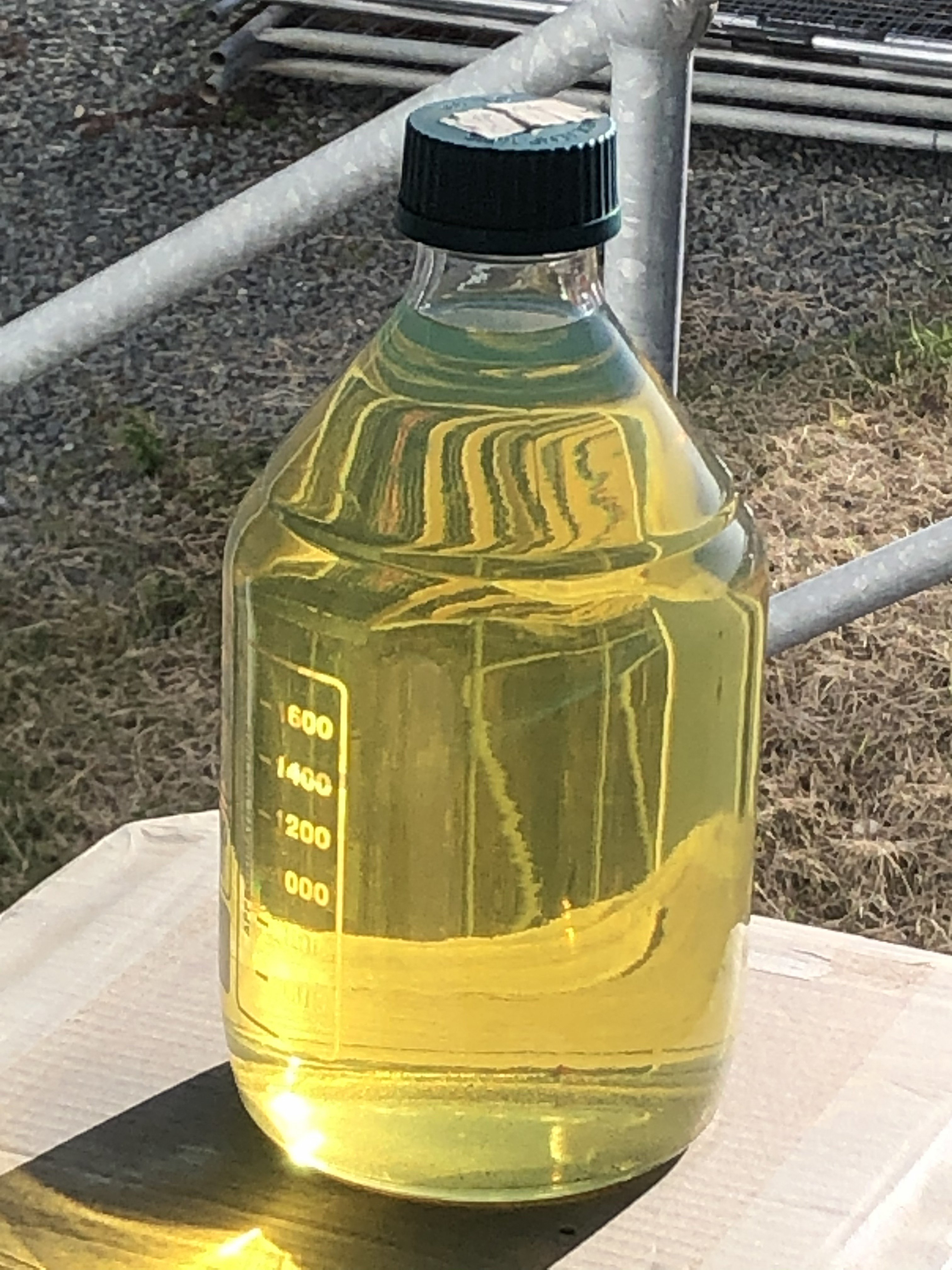
Over the years, we discovered that a by-product of Fuel Doctor was its ability to stabilise fuel. The images referenced are of four-year-old diesel taken from an underground emergency generator tank that Fuel Doctors cleaned and refilled at the Gold Coast Star Casino in 2020.